



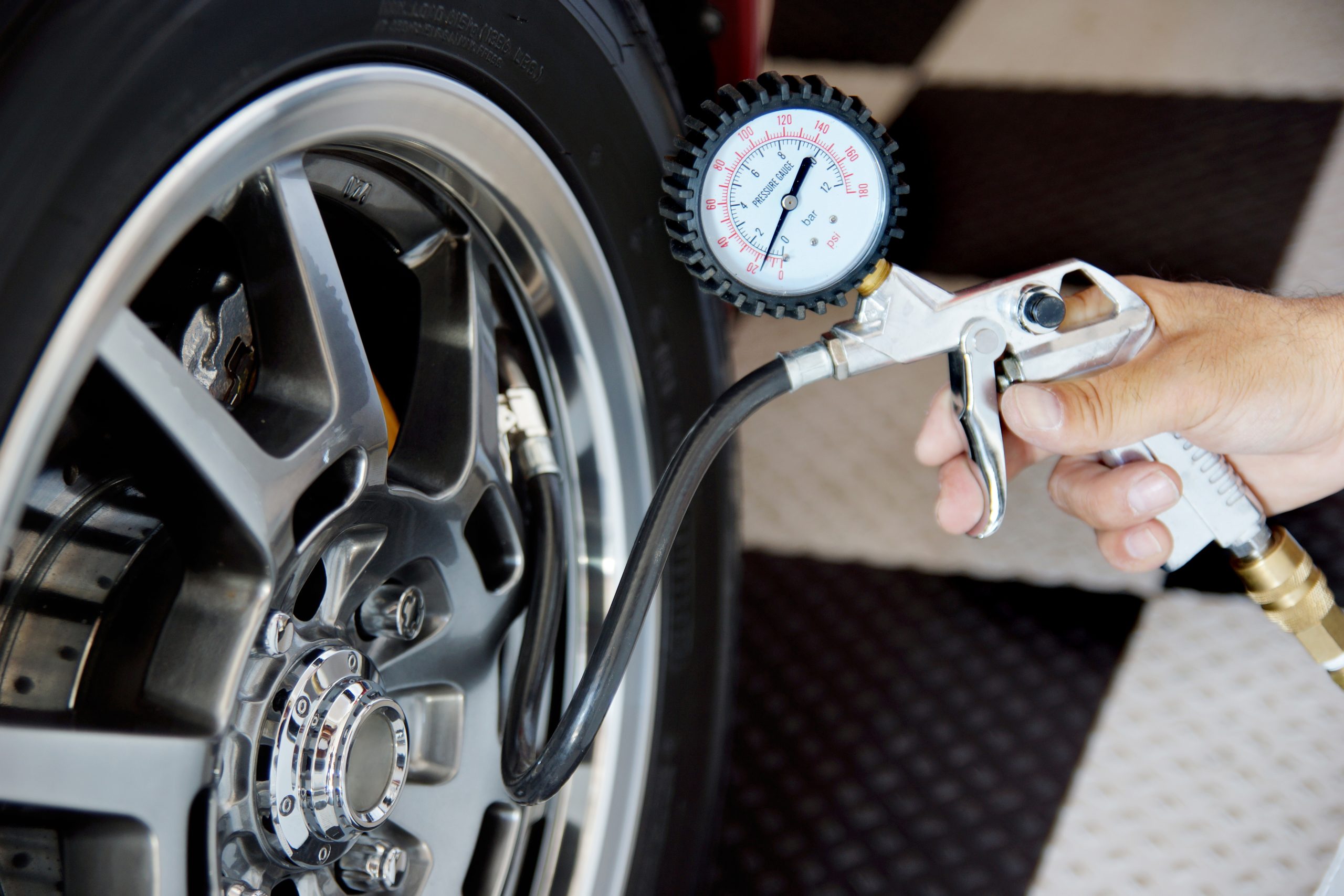
Maintaining proper pressure in your tires is an essential part of car maintenance. You may see that pesky low tire pressure warning and think that you can keep putting it off, especially if there doesn’t seem to be any issues driving. Don’t do this! Keeping your tires filled to the optimal level not only keeps you safe on the road, but also drastically increases the life of your tires by preventing premature wear. As a car owner, it’s important that you know how to check your tire pressure and refill as necessary.
The importance of correct tire pressure
Ensuring that your tires are always properly inflated is important for many reasons. First and foremost, making sure that your tires are full will keep you safe on the road. Deflated tires can decrease the handling and performance qualities of your vehicle, making it harder to control and increasing the likelihood of being in an accident. On top of this, low tire pressure will also decrease the fuel efficiency of your vehicle. As a result, you’ll be spending a lot more time and money at the gas station. If your tires are not completely full, you can also cause premature wear on the treads. This will decrease the life of your tires, meaning that you will have to replace them with new ones more often.
If you’ve been ignoring that low tire pressure warning for a while, it may be a smart idea to check the tread depth of your tires. Simply use the penny trick. Place any normal penny in one of the treads of your tire. Lincoln’s face should be upside down and toward you. If his entire head is exposed, that means that your tires are too worn down. The tread depth is below 2/32nd of an inch and you will need to replace your tires. If you are using the penny trick, make sure that you verify tread depth in several locations on all four of your tires. This is important because tires can wear at different rates in different locations.
Filling your tires to the correct pressure
When it comes to tires, over inflating and under inflating can cause problems. Because of this, you should make sure that you know the maximum pressure for tires on your vehicle. You can find this information inside the driver’s door of your car. There should be a little sticker with this and other information about the vehicle displayed. If your car is a bit older, you may not have this sticker. If this is the case, check in the owner’s manual for your vehicle to find the maximum fill pressure. As a rule of thumb, tires on most vehicles require 32 to 35 psi.
Checking your tire air pressure
Checking the air pressure in your tires is a very simple and easy task that you can do from the comfort of your home. If you don’t already own one, buy a tire pressure gauge. You can get a decent one for under $40 usually. You might also want to consider keeping the pressure gauge in your car permanently. That way, you’ll be able to check your tire pressure on the go. There are pressure gauges at most gas stations, but these are not always the most reliable and can vary from station to station.
When checking the pressure in your tires, first make sure that the car has cooled off, especially if you’ve been driving for a while right before. When you drive, the temperature of the tires increases, causing the pressure to subsequently increase. You will want to make sure that the temperature has returned to ambient levels prior to verifying the pressure. When checking the pressure, first remove the valve stem cap from the tire. Attach the air pressure gauge to the stem. Sometimes, you may get a reading that is clearly inaccurate. If this is the case, remove and reattach the gauge, ensuring that you have a snug fit. This may take a few attempts if it is your first time checking your tire pressure. Once you get a good reading, crosscheck the value on the gauge against the value you read off of the driver’s side door. If there is a discrepancy, add air to the tires.
How to inflate car tires
Inflating your car tires can seem daunting if you’ve never done it before. But there’s no need to worry – filling up your tires is super easy, even for the most inexperienced car owners. There are air refill stations located at most gas stations. Park your car next to one of the dispensers, ensuring that you are positioned well enough so that the air dispenser hose can reach all four of your tires. As with checking the air pressure, you will first want to make sure that your tires have cooled down. Tires heat up when you drive, causing the air inside to expand and increase the pressure. If the nearest air refilling station is quite far from home, make sure that you verify the pressure before leaving the house. Check again once you arrive at the station. If there is a difference, wait until the pressure levels out. Never bleed the air to get the pressure to match.
Once you’re ready to fill your tires, follow these steps:
- Take off the valve stem cap: While your tires will still hold pressure without it, this piece stops debris from entering your tires. Hold onto it!
- Connect the air dispenser hose: Connect the hose to the valve stem, verifying that you have a secure connection between the two.
- Turn on the airflow: Turn on the air dispenser. As you are filling, make sure to keep track of the pressure level to prevent overfilling the tire. Some air dispensers can be preset to a desired fill level, and will beep when the tire reaches this value. If you accidentally add too much air, remove some by pressing on the metal stem.
- Verify the pressure: You should always check the air pressure with your personal pressure gauge, instead of relying on the one at the gas station. Again, these gauges can sometimes be inaccurate.
- Replace the valve cap: Make sure that you replace the valve cap. This will keep dust out of your tire’s interior.
- Repeat: Time to fill the other three tires! Make sure to inflate each to the same pressure.
Filling up your tires doesn’t need to be a huge headache. In fact, it’s one of the most simple and easy maintenance steps that you can complete on your own. By keeping your tires filled to the correct pressure, you can increase your vehicle’s fuel efficiency, maintain good handling qualities, and extend the lifespan of your tires. If you have any questions about filling your tires, do not hesitate to reach out to Vann York’s service department.
Connect with us


- March 2026
- February 2026
- January 2026
- December 2025
- November 2025
- October 2025
- September 2025
- August 2025
- July 2025
- June 2025
- May 2025
- April 2025
- March 2025
- February 2025
- January 2025
- December 2024
- November 2024
- October 2024
- September 2024
- August 2024
- July 2024
- May 2024
- March 2024
- December 2023
- November 2023
- October 2023
- September 2023
- August 2023
- July 2023
- June 2023
- May 2023
- April 2023
- March 2023
- February 2023
- January 2023
- December 2022
- November 2022
- October 2022
- September 2022
- August 2022
- July 2022
Archives
- Blogs
- Buick Dealer
- Buick Enclave
- Buick Envision
- Buick Envista
- Chevrolet Dealer
- Chevrolet Equinox
- Chevrolet Silverado 1500
- Chevy Blazer
- Chevy Cars
- Chevy Dealer
- Chevy Traverse
- Chevy Trax
- Envision
- EV
- GMC
- GMC Acadia
- GMC Canyon
- GMC Dealer
- GMC HUMMER EV Pickup
- GMC Sierra EV
- GMC Sierra HD
- GMC Yukon
- Hummer
- malibu
- Service
- Sierra 1500
- Sierra 2500 HD
- SUVs
- SUVs
- Trailblazer
- Trucks
- Uncategorized